Why a books section?
I enjoy having read but do not always enjoy reading. For my own good, I am hence commiting to read an average of one book every month across 2024—with an imperfect spread dependent on the other preoccupations of life. My progress towards that goal will be published here. With each book having been read, I will also include a brief takeaway of no more than a paragraph.
Arnold Bennett was a British novelist most prolific at the turn of the 20th century. His book, ‘How to Live on 24 Hours A Day’, is an exploration of what it means to live an intentional and cultivated life. He emphasizes the passivity with which the 1910s London working man went about his life; and the opportunity of these same men to convert their “free” time into constructive time. There is a stoic undertone in the pursuit of a defined developmental scope with planned reflection. [Then] Modern life, Arnold argues, is characterized by precisely this pursuit; the becoming a quietly cultivated man irrespective of barriers in work or family.
Cal is the author of one of my favourite books: ‘So Good They Can’t Ignore You’. In fact, it felt like this was written as an addendum to that book; an instruction manual on how to perform quality work in the world. The first portion of the book explains the disproportionate value of deep work; from there, it’s about prioritization and pragmatics. Discussed, there are two levers for ‘deep work’: 1) improving one’s ability to concentrate and 2) overcoming desires for distraction. The book spends a majority of its remainder outlining how to sustainably maximize value with those levers. Truly excellent—a book worth re-reading.
Jeffrey has documented what leads to individual success when humans organize into for- and not-for-profit enterprises. The principles are universal as people do not fundamentally differ. At core, the takeaways are to recognize where resource control clusters, form relationships in those areas, and build and protect your reputation. While uninspiring in synthesis, the book did a phenomenal job in contextualizing these lessons through cases and research; overall, this was a formative book, and I highly recommend it to those beginning their career.
Walter has written, what is, the most comprehensive history of strategy consulting that I have seen. The book chronicles the evolution of strategy from esoteric academic discipline to vital corporate function. Those who deliver strategy—strategy consultants—have positioned themselves as trusted advisors to leaders of industry; consultants are quietly behind many of the most pivotal decisions shaping global markets. All of this, a fundamental transformation in business thinking, has taken place over 60 years, brought about by a small group of academics in Boston.
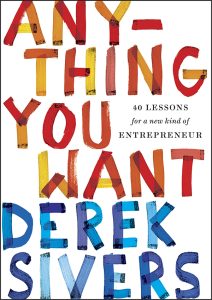
Derek’s first book, ‘Anything You Want’, chronicles his journey through happenstance entrepreneurship. He reflects upon and outlines several principles that enabled the $22m sale of CDbaby. Central to his success was the belief that a company should value its customers above itself. Only by being obsessed with bettering customer’s lives—often by optimizing the seemingly insignificant—can a company expect to earn sustained loyalty and organic growth.
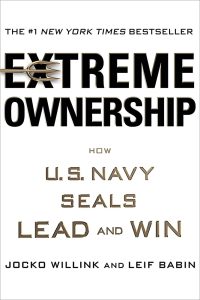
Jocko and Leif are U.S. Navy SEALS, and their book is a reflection on leadership during war. The brutal realities of war act as an amplified theater that mirrors the world of business. In both circumstances, one must lead according to parallel principles of decentralized command, simple strategy, and extreme ownership. Indeed, emphasizing the book’s namesake principle, leaders must hold themselves accountable before expecting others to do the same. The takeaway that most stuck with me, hence, was that to lead is to model how things ought to be; and if that does not work, consider being a better model.
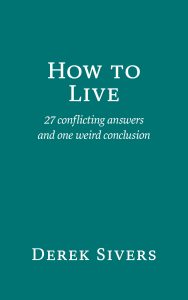
Derek is, in many ways, the inspiration for this website. His latest book, ‘How To Live’, describes 27 conflicting modalities for living; it is not a prescriptive guide to life but rather an overview of how one could live. The takeaway, as I read it, is that a life best lived is often one of thoughtful change. There never will be one single way of living that works across a lifetime; rather, adaptation and the fitting of principles to the present is how to live.